Understand
See what each intervention changes, which outcomes it can influence, and where its limits are.
Learn to use it like a clinical intervention.
Build a physiology-first framework for integrating the major domains of lifestyle medicine across prevention, chronic-disease care, and health optimization.
Very few practitioners were taught how to use it with precision.
“Eat better” is not a nutrition intervention. “Exercise more” does not tell you what kind of movement would help, how much is appropriate, or whether the person can recover from it. “Get more sleep” does not identify what is disrupting their sleep or limiting recovery.
The challenge is not knowing that lifestyle matters. It is deciding which intervention matters most for the person in front of you, how to adapt it to their needs and capacity, and what to change when the response is not what you expected.
Without that framework, lifestyle care can become a growing list of reasonable recommendations—poorly prioritized, difficult to follow, and disconnected from the person’s physiology.
The Lifestyle Intensive gives you a physiology-first framework for moving from broad lifestyle guidance to an intervention that fits the person in front of you. You’ll learn how the major lifestyle domains interact, which domain deserves attention now, and when one may support, constrain, or alter the effects of another.
See what each intervention changes, which outcomes it can influence, and where its limits are.
Choose the most relevant intervention and adapt it to the person’s goals, starting point, health status, context, and capacity.
Evaluate the person’s response and real-world constraints, then decide whether to continue, modify, progress, or reconsider the plan.
The framework applies across very different goals and clinical contexts. What changes is the person’s starting point, priorities, capacity, context, and level of monitoring required.
Build depth in each domain, then learn how to use them as one coherent clinical model. The final integration lesson shows you how to evaluate the person in context, identify what deserves attention now, sequence interventions without overwhelming them, and adjust the plan as the response unfolds.
Move beyond calories and macros into nutrient density, protein adequacy, glycemic dynamics, omega-3 status, gut-barrier support, meal timing, hydration, alcohol, and food-related exposures.
Prescribe resistance training, aerobic conditioning, strategic intensity, sedentary-time reduction, and daily movement while accounting for goals, reserve, energy availability, health status, and recovery.
Understand how light, sleep, meals, activity, and medications interact with the body’s clocks—and replace “sleep more” with a usable circadian prescription.
Assess whether a person can adapt to a physiological demand, identify what may be constraining recovery, and base progression on the completed stress–recovery cycle rather than a single performance.
Separate meaningful environmental burdens from low-value avoidance, prioritize the exposures that deserve attention, and make reduction practical rather than fear-driven.
Account for the ways safety, relationships, work, isolation, resources, and lived context influence physiology, behavior, resilience, and the capacity to change.
Evaluate mind–body interventions by what they target, when they may be useful, where the evidence is strongest, and where their effects should not be overstated.
Integrate all seven domains into one prioritized, sequenced plan—deciding what to address now, what can wait, and how to adapt the plan as the person’s response unfolds.
Many courses explain which lifestyle behaviors support health. The Lifestyle Intensive focuses on the clinical reasoning required to apply them together, for a particular person, over time.
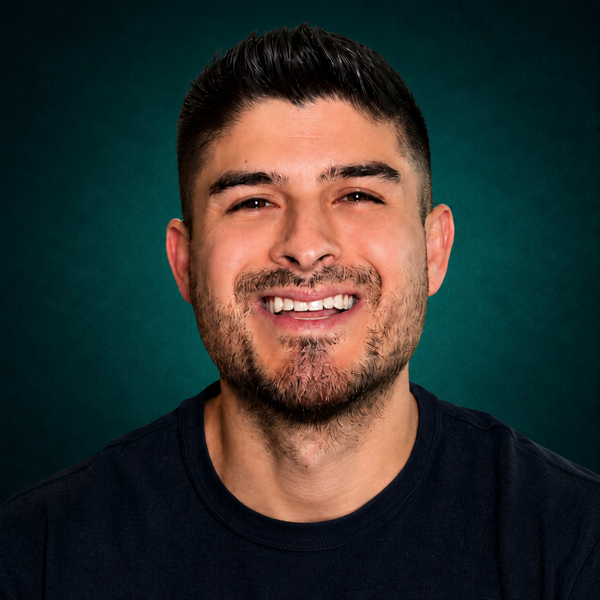
Andrew Reid
I’ve spent my career working on both sides of the same problem: caring for patients and clients directly, and teaching the science of health to the clinicians who care for them.
The Lifestyle Intensive grew from that experience—connecting the science of lifestyle medicine with the practical reasoning needed to apply it thoughtfully in real-world care.
Physician Assistant, UC Davis·MS, Personalized Nutrition, University of Connecticut·Dietetics, Cal State LA
As a clinician, I have not found a single provider including nutritionist and functional med, who thinks holistically and zooms out the way Andrew does.
I'm starting to put all the pieces in place to start a functional nutrition practice and this program is helping to develop a framework right out of the gate that goes well beyond functional medicine in and of itself and provides a deeply complementary approach to traditional and various lifestyle clinical settings.
This course is finally filling in the gaps that allopathic medicine cannot, or will not, fill.
The Lifestyle Intensive solves the gap between knowing that lifestyle matters and knowing how to use it. Its physiology-first framework helps you connect the major domains, identify the right priority for the person in front of you, and adjust the plan as their response unfolds—turning disconnected recommendations into a coherent, individualized intervention.
Explore the course for 60 days. If you don’t love it for any reason, email us within 60 days of enrollment and we’ll refund every penny. No forms. No hoops.
The Lifestyle Intensive is designed primarily for clinicians and qualified health professionals who want to apply lifestyle medicine with greater precision. It may also be valuable for patient advocates and individuals who want a deeper understanding of how lifestyle influences their own health. This is a science-heavy, technical, and nuanced course, best suited to learners who are comfortable engaging with detailed physiology and clinical reasoning. It provides education—not personalized medical advice or a substitute for care from a qualified health professional.
You’ll get immediate access to Restoring Metabolic Capacity Through Nutrition, The Exercise Prescription, Chronobiology, and Recovery Capacity. The final four lessons will be added to your dashboard within 30 days.
It does not rely on rigid, diagnosis-based protocols. It teaches the physiological reasoning needed to build, explain, and adjust an intervention for the person in front of you.
No. The Lifestyle Intensive is advanced professional education, not a certification, and formal CME accreditation is not currently included.
Your enrollment includes lifetime access to the course and its future updates, so you can move through the curriculum at your own pace and return to it as your practice evolves.
Your enrollment is covered by a 60-day money-back guarantee. If you don’t love the course for any reason, email us within 60 days of enrollment and we’ll refund every penny.
Build the framework to connect the major domains, identify what deserves attention first, and adjust the approach as the response unfolds.
Get early access60-day money-back guarantee